


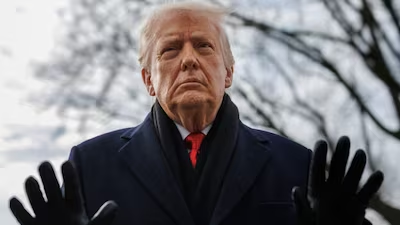
DAVOS, SWITZERLAND — In a move that has electrified the hallways of the World Economic Forum (WEF) 2026, U.S. President Donald Trump has extended an exclusive invitation to India’s top corporate titans for a private reception following his special address on Wednesday, January 21, 2026. This “Closed-Door Audit” of global business leaders marks a pivotal moment in Trump’s second-term economic strategy, signaling that India remains the primary counterweight to his escalating tariff war with Europe and China.
The Billionaire Guest List: India’s Power Players
From an editorial perspective, the White House “A-List” confirms that Washington views the India-US trade corridor as its most vital insurance policy. Among the 100+ Indian CEOs in Davos, those expected at the reception include:
- The Titans: Mukesh Ambani (Reliance Industries), N. Chandrasekaran (Tata Sons), and Sanjiv Bajaj (Bajaj Group). Anish Shah, Group Chief Executive of the Mahindra Group
- The Tech Pioneers: Nandan Nilekani and Salil Parekh (Infosys), representing India’s massive AI and digital service exports. Srini Pallia, CEO of Wipro: Salil S Parekh, CEO of Infosys
- The New Guard: Nikhil Kamath (Zerodha) and various Unicorn founders, as Trump pivots toward a “Crypto-Friendly” and “Tech-Forward” economic doctrine.
The ‘Greenland’ Shadow and the Tariff Shield
The reception comes at a time of extraordinary friction. While Trump has stunned European leaders with punitive tariff threats over the Greenland annexation dispute, his tone toward India has remained strategically warm.
- The ‘Make America Go Away’ Counter: As European stocks tumble, Indian CEOs are being positioned as the “Preferred Partners.”
- The SHANTI Act Advantage: Sources suggest the “closed-door” talks will focus on India’s new SHANTI Act (Nuclear energy advancement) and joint manufacturing in defense and semiconductors—areas where Trump’s “America First” aligns perfectly with India’s “Make in India” 2.0.
Why This Matters for Global Markets (SEO Insights)
For investors, the Trump-India Reception is the ultimate signal of a “Sovereign Pivot.”
- The $150 Oil Hedge: As war fears in the Middle East loom, the U.S. and India are discussing a long-term energy “Shield,” including massive LNG deals.
- Supply Chain De-risking: For Indian firms like Mahindra and JSW Steel, this reception is a chance to secure “Exemption Status” from future U.S. tariffs by committing to high-value investments on American soil.

