


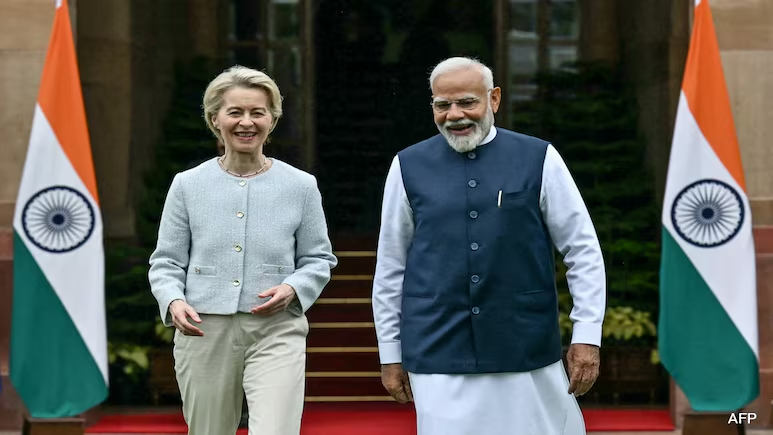
DAVOS, SWITZERLAND In a landmark special address at the World Economic Forum (WEF) 2026, European Commission President Ursula von der Leyen announced that the European Union is on the “cusp” of a historic Free Trade Agreement (FTA) with India. Describing the pact as the “mother of all deals,” the EU chief signaled that nearly two decades of stop start negotiations are finally reaching a climax, potentially creating a combined market of two billion people.
The Global Pivot Why the India EU FTA Matters Now
Speaking to global elites in the Swiss Alps on January 20, 2026, von der Leyen emphasized that the deal would account for almost a quarter of global GDP.3 The timing is critical; as the “Trump 2.0” administration shifts toward protectionist tariffs and a focus on Greenland, the EU is aggressively diversifying its supply chains to “de-risk” from traditional dependencies.
“Europe will always choose the world, and the world is ready to choose Europe,” von der Leyen declared, positioning the India partnership as the cornerstone of a new, independent European economic strategy.5
Key Highlights of the Proposed India-EU Trade Pact
| Feature | Impact & Details |
| Market Size | Links 27 EU nations with India’s 1.4 billion consumers. |
| GDP Weight | The combined bloc represents roughly 25% of global GDP. |
| Strategic Timing | Conclusion of talks expected by January 27, 2026. |
| Chief Guests | Von der Leyen and EU Council President Antonio Costa to attend India’s Republic Day. |
The ‘Republic Day’ Deadline Finalizing the Deal
The “Merry Dance” of technical hurdles is nearly over. Von der Leyen confirmed she will travel to India immediately following the Davos summit.6 Her visit coincides with India’s 77th Republic Day, where she and President Antonio Costa will serve as Chief Guests.7
Indian Commerce Minister Piyush Goyal has echoed this optimism, labeling the agreement a “super deal” for Indian exporters, particularly in the textiles, gems, and machinery sectors.8 For the first time, a military contingent from the European Union will also participate in the Republic Day parade a symbolic gesture of the deepening security and defense partnership that accompanies the trade pact.9
Remaining Hurdles: The ‘First-Mover’ Advantage
While the rhetoric is soaring, the EU chief admitted there is “still work to do” regarding digital trade rules, sustainability clauses, and market access for dairy and spirits.10 However, the geopolitical imperative to counter China’s dominance and navigate the “Nixon-style” shocks of the current U.S. administration has forced both Brussels and New Delhi to the finish line.
Editorial Verdict: A New Economic Gravity
As an editor, I see this as the definitive “pivot to the Global South” for Brussels. By securing the “Mother of All Deals” in 2026, the EU isn’t just buying Indian goods; it is buying an insurance policy against a fracturing world order. If the ink dries on January 27, the global economic map will have a new, formidable center of gravity.

